Rising beyond the tag of 'teenage motherhood'
CFK Africa has launched Still, I Rise: Stories of Resilience from Teenage Mothers in Kenya’s Slums, a collection featuring the personal accounts of 28 young women who became mothers as teenagers in Nairobi’s informal settlements.
The book was launched early this month during a private reception at Circle Art Gallery in Nairobi attended by the contributors, their families, media representatives and supporters.
The collection seeks to shift the conversation around teenage pregnancy from statistics to the lived experiences of young mothers, highlighting their resilience and the importance of support, education and opportunity.
“I refuse to let the label of ‘teenage mother’ define me. At my core, I know that I am so much more than that,” writes Hilda Villary, who became a mother at the age of 17 and is one of the book’s contributors.
Rising concern
The publication comes as Kenya faces growing concern over adolescent pregnancy. According to the Kenya National Bureau of Statistics’ 2026 Economic Survey, pregnancies among girls aged 10 to 14 rose by 14.6 per cent in 2025 compared with the previous year.
A CFK Africa poll conducted in July 2026 among residents of Nairobi’s informal settlements also found widespread concern about teenage pregnancy. Of the 121 respondents, 97.5 per cent said the issue was pressing in their communities, while 81 per cent of 116 respondents said they believed teenage pregnancy had increased over the previous year.
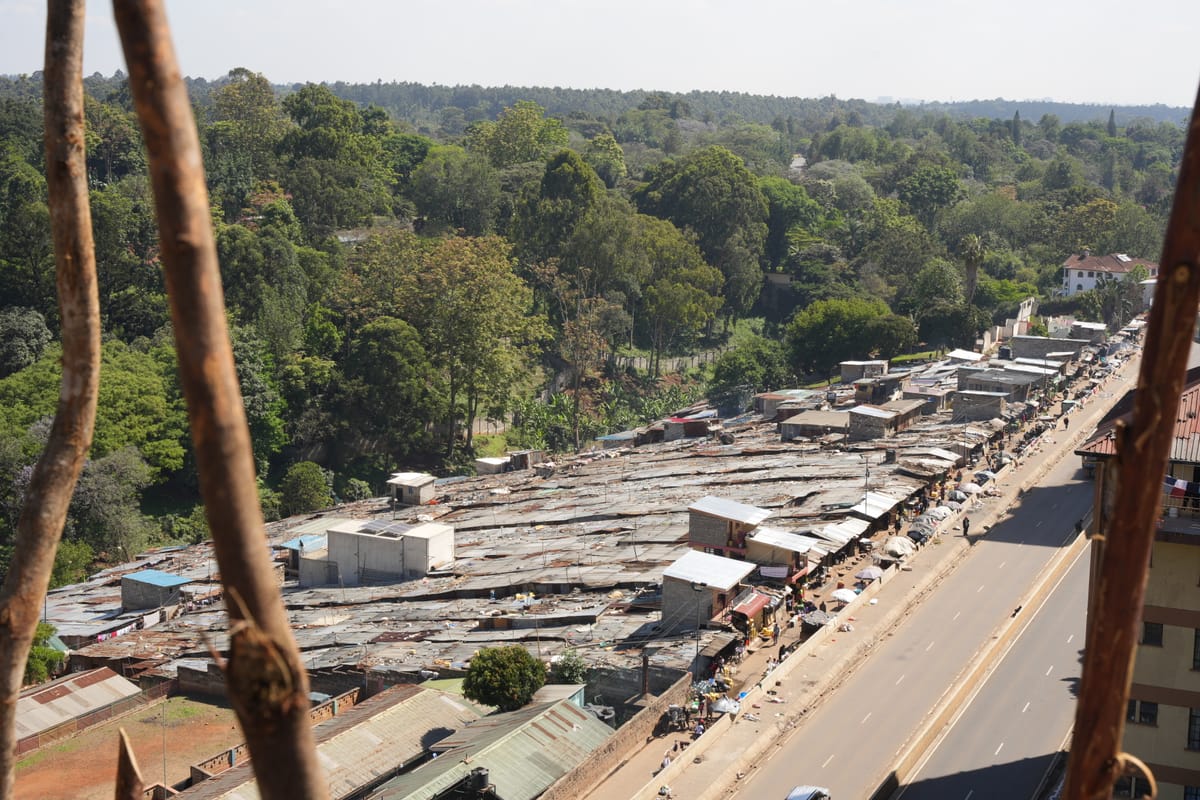
The organization uses the term “slums” in the title because it is commonly used by residents to describe Nairobi’s informal settlements, where an estimated 60 per cent of the city’s nearly 4.4 million residents live.
Stories in their own words
The 28 contributors wrote their accounts during a retreat in 2025. Their stories appear alongside photographs and reflect their experiences as members of CFK Africa’s Girls Empowerment Programme, which supports young mothers seeking to return to school.
“These are stories like mine, young mothers who kept going when the odds were against them,” said Siama Yusuf, the programme’s lead and co-editor of the book.
“We are not sharing them to dwell on the difficulty, but to show what becomes possible when a girl is supported rather than judged. My hope is that people here and beyond see the strength in every young mother, and what a community can do when it decides to stand with her.”
CFK Africa Chief Executive Officer Jeffrey Okoro said the book reflected the organisation’s belief that communities closest to a problem are best placed to understand it and shape solutions.
“For 25 years we have preached and acted on this truth that so much of the development industry misses,” Okoro said. “The people closest to a problem already understand it better than anyone arriving with a solution. This book is that idea in its simplest form. We did not tell these stories. We got out of the way so they could be told.”
Part of anniversary celebrations
The launch opened a weekend of activities marking CFK Africa’s 25 years of service, which began in Kibera in 2001.
The organisation held its annual Community Celebration in Kibera on Saturday, August 8, recognising locally led change through awards including the Pheroze Nowrojee Social Justice Award and the Jackie Teen Mother Award. The latter honours young mothers who are making a positive contribution to their communities.
Isis Nyong’o Madison, a member of the CFK Africa Advisory Council, technology entrepreneur and Non-Executive Director of Nairobi Securities Exchange PLC, described the book as evidence of the value of peer-led safe spaces.
“Still, I Rise is a true testament to the importance of peer-led safe spaces that not only allow girls to be truly seen and understood but also give them the courage and tools to increase personal agency over their lives,” she wrote.
Actress and humanitarian activist Mia Farrow also praised the collection, calling it “a necessary and unforgettable book.”
“The young mothers of Still, I Rise reclaim their own stories, in their own words, and remind us that the most vulnerable among us are so often the bravest,” Farrow wrote. “We owe them more than our attention. We owe them our action.”